



Шанман (Линьи) Машинери Ко, Лтд.

QT40-3B Мобильная машина для производства бетонного кирпича

QT40-3B Мобильная машина для производства бетонного кирпича

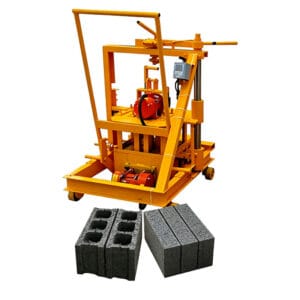
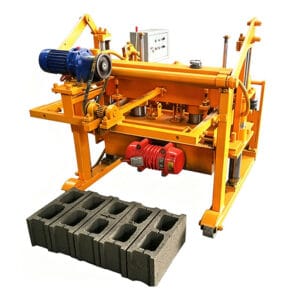
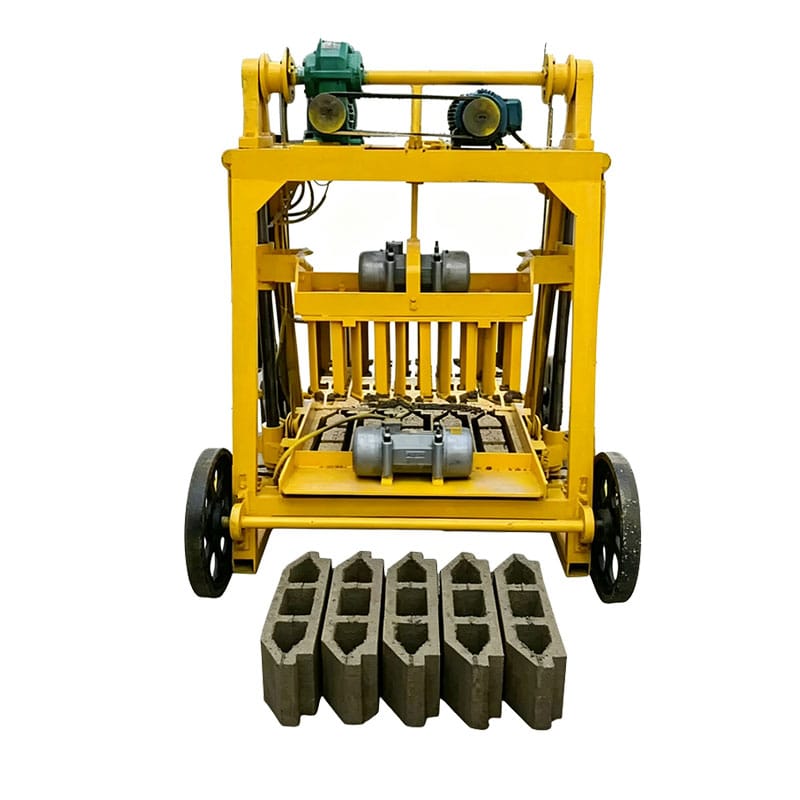
The QT40-3B mobile concrete brick making machine is a compact-to-medium-sized unit that integrates mobility with block molding, utilizing mold-box vibration and hydraulic transmission technologies. Characterized by its compact size, high output, ease of operation, and low energy consumption, the machine requires no complex installation or commissioning; it is ready for production as soon as the power is connected. Equipped with wheels, it can move forward, backward, and turn freely on hardened concrete surfaces. The machine operates without the need for pallets, significantly reducing procurement costs.

Размеры: 1350 × 1300 × 1650 мм
Вес: Приблизительно 1 Т
Цикл формования: 45 секунд/форма

Overview

The QT40-3B mobile concrete brick making machine is a compact-to-medium-sized unit that integrates mobility with block molding, utilizing mold-box vibration and hydraulic transmission technologies. Characterized by its compact size, high output, ease of operation, and low energy consumption, the machine requires no complex installation or commissioning; it is ready for production as soon as the power is connected. Equipped with wheels, it can move forward, backward, and turn freely on hardened concrete surfaces. The machine operates without the need for pallets, significantly reducing procurement costs.

Key Advantages

1. No installation required; plug-and-play: The equipment requires no complex installation or foundation work; simply connect to a power source to begin production.

2. Pallet-free design; cost savings: Brick green bodies are formed directly on the ground, eliminating the need to purchase pallets and significantly reducing initial investment.

3. Highly mobile: Equipped with wheels, the unit can freely move forward, backward, and turn on paved surfaces, making it ideal for operations across multiple job sites.

4. High efficiency, low consumption: Mold-box vibration technology achieves powerful compaction with low power input; production output rivals that of large-scale hydraulic equipment.

5. Easy to operate: Production requires only 2–3 personnel, with minimal technical expertise needed for operators.

6. Versatile raw materials: Compatible with a wide range of materials, including cement, sand, crushed stone, fly ash, tailings, and construction waste.

7. Flexible brick types: Easily produce bricks of various specifications and types simply by changing the molds.

8. Quality assurance: Constructed from No. 16 manganese steel treated with high-temperature carburization, achieving a hardness of HRC 54–58; transmission gears are made from special steel for enhanced durability. VII. Brick Types

By simply changing the molds, the QT40-3B can produce a wide variety of brick types

Brick Dimensions | Application

400×100×200mm | Hollow block

400×120×200mm | Hollow block

400×150×200mm | Hollow block

400×200×200mm | Standard hollow block

400×250×200mm | Large hollow block

240×115×90mm | Standard brick

200×100×60mm | Paving brick

300×150×100mm | Block

200×200×60mm | Paving brick

150×150×100mm | Small block

230×220×115mm | Special-shaped block

The above are standard brick types; molds can also be customized to produce bricks with special specifications according to customer requirements.

Operation

Working Principle

The QT40-3B mixes raw materials—such as cement, sand, and crushed stone—into a uniform concrete mixture using a mixer, which is then manually fed into the main machine's mold box. Assisted by the hydraulic system, the mold box fills and compacts the material; simultaneously, a vibrator generates high-frequency vibrations to ensure the concrete mixture is fully densified within the mold, rapidly forming the brick. The coordination between the hydraulic and vibration systems achieves efficient molding characterized by "low power consumption and powerful vibration."

Workflow

1. Raw Material Preparation: Measure raw materials (cement, sand, crushed stone, etc.) according to the mix ratio and feed them into the mixer.

2. Mixing: The JQ350 mixer blends the raw materials into a uniform concrete mixture.

3. Mold Positioning: Install the appropriate mold based on the desired brick type.

4. Feeding: Manually feed the mixture into the main machine's mold box.

5. Molding/Pressing: High-frequency vibration densifies and shapes the concrete within the mold box.

6. Demolding/Brick Discharge: After molding, the mold is released, and the brick is deposited directly onto the ground (no pallets required).

7. Natural Curing: Stack the bricks and cure them by watering.

8. Finished Product: Ready for use after the curing process is complete.

The entire process operates in a cycle, with a single molding cycle taking approximately 45 seconds.

Configuration

The QT40-3B brick production line consists of the following equipment and systems

ComponentDescription
Batching SystemManual or simple batching unit for weighing raw materials—such as cement, sand, and crushed stone—according to the mix ratio
JQ350 MixerMixes raw materials into a uniform concrete mixture
QT40-3B Main UnitMobile block-forming machine that performs vibration molding and demolding of the brick units
Mold SystemInterchangeable molds to suit different brick types
Water Supply SystemProvides water for mixing and curing
Curing AreaArea for the natural curing of stacked brick units

Specification

Parameter ItemTechnical Specifications
Main Machine Dimensions1350 × 1300 × 1650 mm
Main Machine WeightApprox. 1,000 kg
Molding Cycle45 seconds/mold
Vibration Force30 kN
Vibration MethodMold box vibration
Main Machine Power6.7 kW
Control MethodSemi-automatic control
Molding MethodMold box vibration + hydraulic-assisted molding
Number of Operators2–3 (1 operating the main machine; 1–2 handling mixing and feeding)
Voltage220V / 380V / 415V / 440V (customizable upon request)
Compatible Mixer ModelJQ350
Pallet SizeNo pallet required (pallet-free design)
Installation Area RequirementsHardened, level ground; no special foundation required
Curing Area for Green BricksRecommended ≥200 m² (depending on daily output)
Water Consumption for MixingApprox. 0.35 m³/hour (depending on mix ratio)
Water Usage for Natural CuringApprox. 1–2 tons/day; keeping bricks moist is recommended
Suitable Raw MaterialsCement, sand, crushed stone, fly ash, tailings, construction waste, etc.

Capacity

The theoretical output of the QT40-3B varies depending on the brick type

Brick DimensionsBricks per ModuleHourly Output8-Hour Output
400×100×200mm7 bricksApprox. 420 bricksApprox. 3,360 bricks
400×150×200mm5 bricksApprox. 300 bricksApprox. 2,400 bricks
400×200×200mm4 bricksApprox. 240 bricksApprox. 1,920 bricks
400×250×200mm3 bricksApprox. 180 bricksApprox. 1,440 bricks

(The above figures are theoretical reference values; actual output is influenced by factors such as raw material proportions and operational proficiency.)

ПОЛУЧИТЬ БЕСПЛАТНУЮ ЦИТАТУ

Контактная форма Демо

By changing molds, the machine can produce hollow blocks, solid blocks, paving bricks, interlocking pavers, curbstones and other concrete products.

Common materials include cement, sand, crushed stone, fly ash, slag and other locally available aggregates. The exact mix depends on the required block strength and finish.

Yes. We can recommend or customize the machine configuration, mold design, production capacity and automation level according to your block samples and factory conditions.

Standard supply normally includes the main block machine, control system and selected mold. Mixers, conveyors, pallet systems and other auxiliary equipment can be added as required.

Yes. We provide installation guidance, commissioning, operator training, technical support and spare-parts service. Remote and on-site support options are available.

ПОЛУЧИТЬ БЕСПЛАТНУЮ ЦИТАТУ

Контактная форма Демо