



Shanman (Linyi) Machinery Co, Ltd.

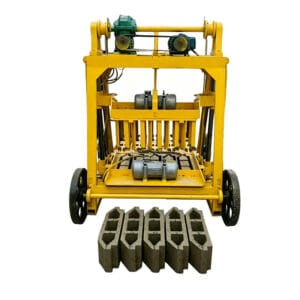
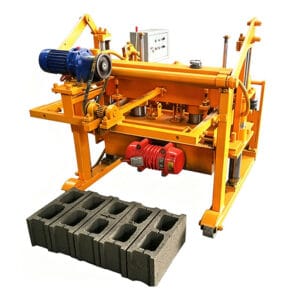
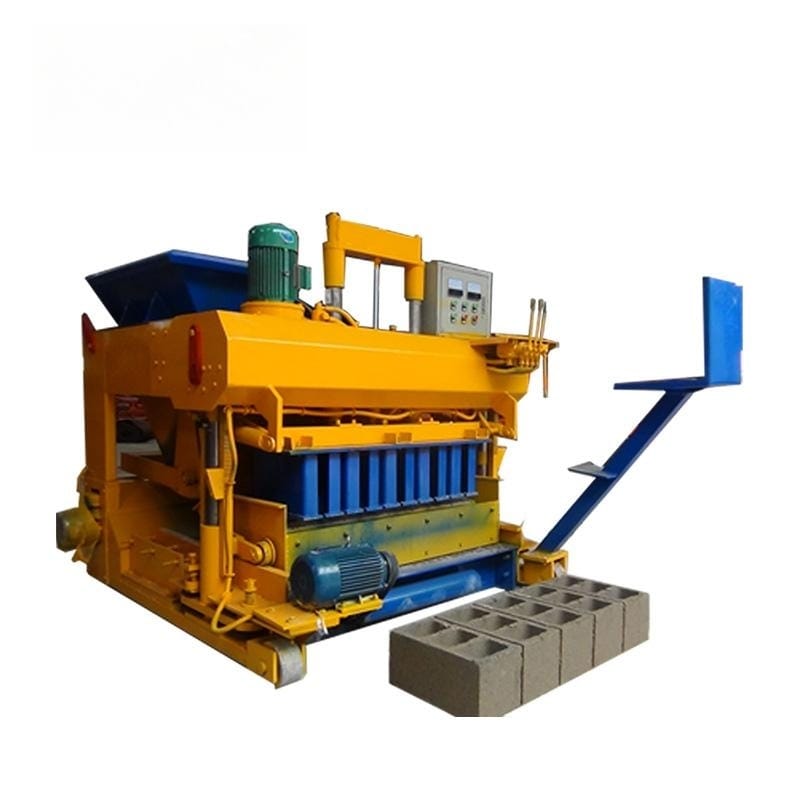
Machine mobile de fabrication de briques en béton QTM6-25

Machine mobile de fabrication de briques en béton QTM6-25

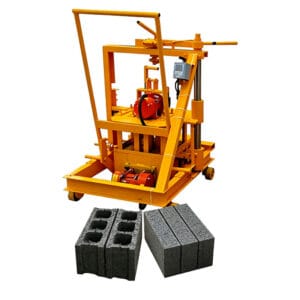
La QTM6-25 est une machine mobile (“ing-type”) de moulage de blocs de béton Construite en acier de haute qualité utilisant des techniques de soudage de précision et équipée de composants hydrauliques de qualité supérieure, la machine offre une longue durée de vie et un faible taux de défaillance.

Dimensions : 1800×1800×1500mm
Poids: 2,3 T
Cycle de moulage : 20 secondes 30 secondes

Overview

The QTM6-25 is a mobile ("walking-type") concrete block molding machine. Constructed from high-quality steel using precision welding techniques and equipped with premium hydraulic components, the machine offers a long service life and a low failure rate.

This equipment operates directly on a concrete surface, eliminating the need for brick pallets. It utilizes dual-stage vibration technology and a hydraulic pressing process to produce blocks characterized by high density, high strength, precise dimensions, and excellent surface finish. With its built-in mobility function, the machine can move flexibly around the site, making it ideal for locations with limited space or operations requiring frequent relocation.

Key Advantages

1. No pallets required; significant investment savings: Production takes place directly on the concrete floor, eliminating the need to purchase brick pallets and resulting in substantial cost savings compared to stationary brick-making machines.

2. Highly mobile and adaptable: Equipped with a motorized drive system, the machine moves freely around the site, making it ideal for rotating production across multiple locations or for projects requiring frequent relocation.

3. Versatile production: A single machine can produce various brick types—such as hollow bricks, solid bricks, pavers, and interlocking blocks—simply by changing the mold.

4. High quality and durability: Constructed using high-grade steel and precision welding techniques, and featuring a hydraulic system with premium components, the machine offers a long service life and a low failure rate.

5. High efficiency and low consumption: Utilizes mold vibration technology to achieve powerful vibration effects with low power input; features a short molding cycle (20–35 seconds), low energy consumption, and high output.

6. Easy operation: Features a simple structure and linear layout for convenient installation and maintenance; PLC automatic control reduces the complexity of manual operation.

7. Low investment, quick return: Moderately priced and reliable, the equipment allows for a rapid return on investment.

Brick Types Produced

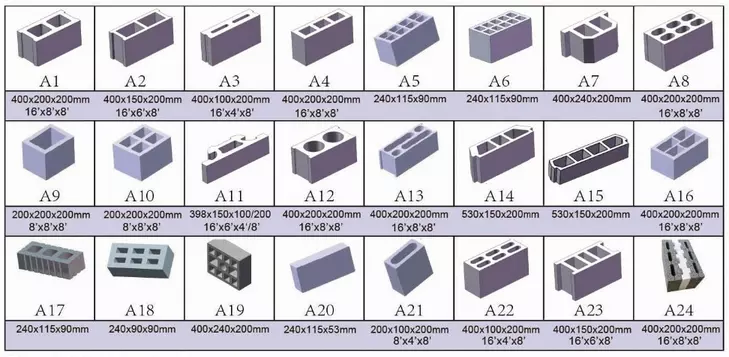
By simply changing molds, the QTM6-25 can produce the following brick types

• Hollow bricks: 400×200×200mm, 400×150×200mm, 400×100×200mm

• Solid bricks: 240×115×90mm, 230×220×115mm

• Pavers: 200×100×60mm, 200×200×60mm, 150×150×100mm

• Interlocking blocks: 300×150×100mm, 400×200×200mm

• Other custom brick types: Molds can be customized according to customer requirements.

QTM6-25 product detail

Operation

Simple Working Principle

The QTM6-25 brick machine employs a molding method combining hydraulic pressing and high-frequency vibration. Its core operating principle involves: uniformly filling the mold with concrete via low-frequency feeding, followed by high-frequency vibration and hydraulic pressing to fully liquefy the concrete and expel air within 2–3 seconds, resulting in high-density, high-strength brick bodies. The main unit utilizes mold vibration, achieving powerful vibration effects with relatively low power consumption.

Workflow

1. Batching: Raw materials (cement, sand, aggregate, etc.) are loaded into the PLD800 concrete batching machine according to the mix ratio.

2. Mixing: Materials enter the JS500 concrete mixer, where water is added and the mixture is blended into uniform concrete.

3. Feeding: Concrete is transported via a hopper into the brick machine's feed hopper.

4. Molding: The machine automatically executes the sequence: material distribution → low-frequency feeding → high-frequency vibration → hydraulic pressing → demolding.

5. Movement: After molding, the machine automatically moves to the next position, leaving the brick bodies directly on the hardened ground for curing.

6. Curing: Natural curing (water spraying).

Configuration

Equipment NameModel/SpecificationKey Parameters
Concrete Batching MachinePLD800Production capacity 60 m³/h; hopper volume 2 × 3 m³; power 9 kW
Concrete MixerJS500Capacity 25 m³/h; discharge capacity 500 L; mixing motor 18.5 kW
Raw Material Feeding Hopper0.6 m³Load capacity 1 t; engine power 16 kW
Machine mobile de fabrication de briquesQTM6-25Main unit power 9 kW; hydraulic pressure 16–20 MPa

Additionally, the following equipment is recommended

• Forklift brick clamps and small wheel loaders for handling finished bricks and loading/unloading raw materials

• Molds for various brick types, enabling a single brick-making machine to produce different styles of bricks

Specification

Parameter ItemSpecifications
Main Machine Dimensions1800 x 1800 x 1500 mm
Main Machine Weight2,300 kg
Molding Cycle20–30 seconds
Main Machine Power9 kW
Control SystemPLC automatic control
Molding MethodHydraulic pressing + high-frequency vibration
Number of Operators3–5 people
Voltage220V/380V/415V/440V, 3-phase, 50–70 Hz (adaptable to local grid)
Compatible Mixer ModelJS500
Pallet SizeNo pallet required
Installation Area RequirementsLevel, hardened ground
Curing Area for Molded BricksRecommended > 500 m²
Water Consumption for MixingRecommended daily supply: 1–2 tons
Water Usage for Natural CuringRecommended daily supply: 2–3 tons (typically 2–3 times daily)
Suitable Raw MaterialsCement, sand, crushed stone, fly ash, construction waste, etc.

Capacity

Based on different brick specifications, the theoretical production capacity of the QTM6-25 is as follows

QTM6-25 product detail
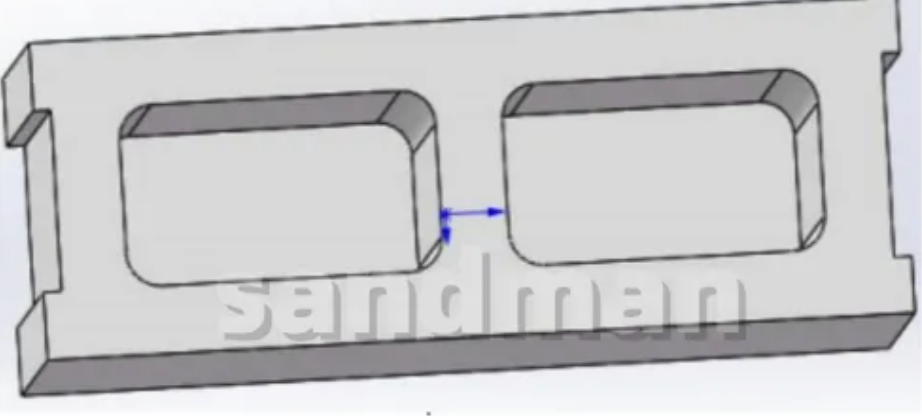
8”/400×200×200mm/2holes
Production Capacity
– Per mold: 6 blocks – Per hour: Approx. 720-1080 blocks – Per 8 hours: 5760-8640 blocks
QTM6-25 product detail
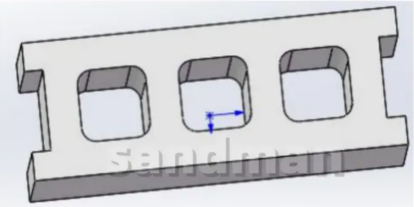
6”/400×150×200mm/m/3holes
Production Capacity
– Per mold: 7 blocks – Per hour: Approx. 840-1260 blocks – Per 8 hours: 6720-10080 blocks
QTM6-25 product detail
4”/400×120×200mm/2holes
Production Capacity
– Per mold: 7 blocks – Per hour: Approx.1080-1620 blocks – Per 8 hours: 8640-12960 blocks

Note: The figures above represent theoretical output; actual output is influenced by factors such as raw material proportions, operational proficiency, and site evenness.

Find the Right Brick Machine

Tell us your block type, target capacity, and budget. Our engineers will recommend the right production solution for your project.

OBTENEZ UN DEVIS GRATUIT

Démo du formulaire de contact

En changeant de moule, la machine peut produire des blocs creux, des blocs pleins, des pavés, des pavés imbriqués, des bordures et d'autres produits en béton.

Les matériaux courants comprennent le ciment, le sable, la pierre concassée, les cendres volantes, les scories et autres granulats disponibles localement. Le mélange exact dépend de la résistance et de la finition requises du bloc.

Oui. Nous pouvons recommander ou personnaliser la configuration de la machine, la conception du moule, la capacité de production et le niveau d'automatisation en fonction de vos échantillons de blocs et des conditions d'usine.

L'alimentation standard comprend normalement la machine à blocs principaux, le système de contrôle et le moule sélectionné Des mélangeurs, des convoyeurs, des systèmes de palettes et d'autres équipements auxiliaires peuvent être ajoutés selon les besoins.

Oui. Nous fournissons des conseils d'installation, de mise en service, de formation des opérateurs, un support technique et un service de pièces de rechange. Des options de support à distance et sur site sont disponibles.

OBTENEZ UN DEVIS GRATUIT

Démo du formulaire de contact