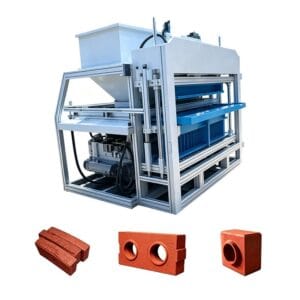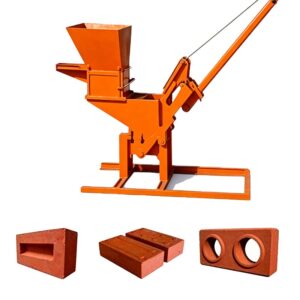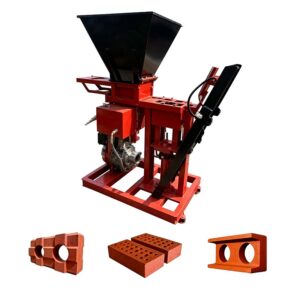




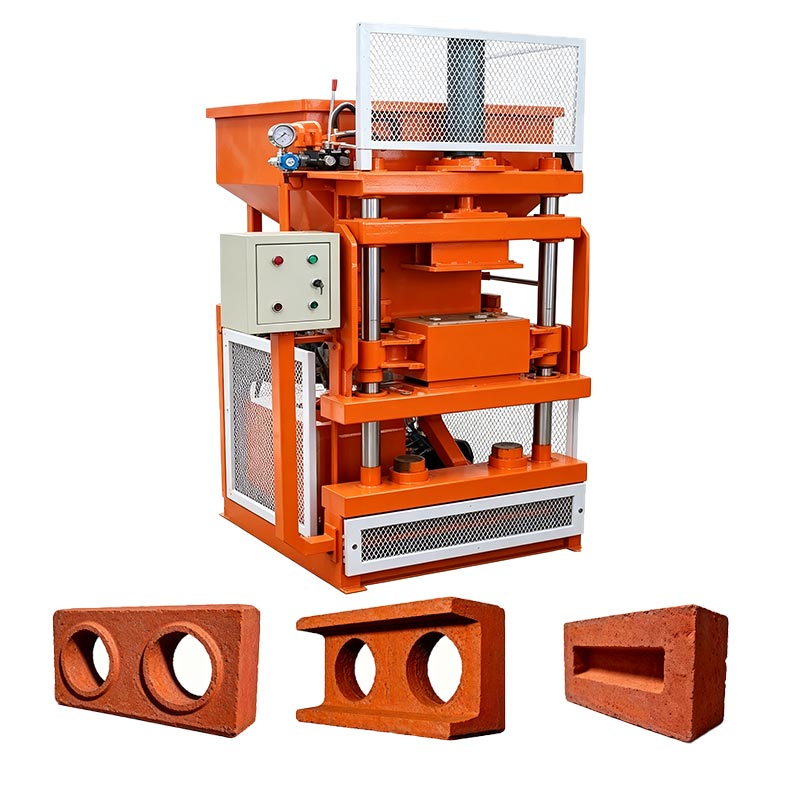
Overview
The QTS1-10 clay brick machine is a small-to-medium-sized hydraulic press designed to produce interlocking clay blocks. It utilizes clay, red soil, or general earth as primary raw materials, mixed with a small amount of cement. As the bricks are formed via compression rather than firing, the machine is classified as eco-friendly, non-fired brick-making equipment. Developed specifically for small-to-medium brickyards, rural infrastructure projects, and overseas markets (including Africa, Southeast Asia, and South America), the machine features a compact structure and a small footprint. It can be powered by electricity or an optional diesel engine, making it suitable for regions with unstable power supplies. Equipped with a PLC semi-automatic hydraulic control system, the machine integrates material feeding, compression molding, and automatic demolding. It produces one brick per cycle with a short molding time, requires minimal manpower, and offers a low investment threshold with quick returns, making it a popular choice for small building material processing plants.
The QTS1-10 is highly adaptable to various raw materials. Ordinary clay, red soil, or loam—combined with a small amount of cement and processed through crushing, screening, and mixing—can be pressed into various products such as high-density interlocking bricks, solid bricks, and hollow bricks. The resulting bricks are dense and possess high compressive strength; the interlocking bricks are easy to assemble and widely used in housing construction, boundary walls, slope protection, and road building. They are particularly well-suited for rural housing, poverty-alleviation construction projects, and hydraulic slope protection works. The machine operates without pallets, depositing formed bricks directly onto the ground; this eliminates pallet procurement costs and further reduces the customer’s initial investment, making it highly favored by small-to-medium investors.
Core Product Advantages
1. Low investment and quick setup: The total equipment cost is significantly lower than that of large-scale brick-making systems. It eliminates the need for brick kilns and the firing process—saving on high construction costs—and allows for production in open-air areas. With a rapid return on investment, it is ideal for small and medium-sized entrepreneurs.
2. Easy access to raw materials: Materials can be sourced locally (e.g., clay or red soil) with the addition of only a small amount of cement. Low procurement costs make it highly suitable for resource-rich overseas regions.
3. Versatile power options: Supports dual power sources (electric and diesel). The diesel option ensures uninterrupted production in areas with unstable power grids, such as parts of Africa.
4. Consistent quality and high strength: Uses 16 MPa high-pressure hydraulic molding to produce dense, high-strength bricks. The interlocking design ensures a tight fit, resulting in stable structures for housing and slope protection.
5. No pallets required: Freshly molded bricks are placed directly on the ground, eliminating the ongoing costs associated with purchasing, maintaining, and replacing pallets, thereby reducing long-term operating expenses.
6. Flexible mold changing and multi-purpose use: Quickly switch molds to produce various brick specifications. A single machine can manufacture bricks for housing, slope protection, and paving, meeting diverse order requirements.
7. Simple operation and maintenance: Features semi-automatic PLC control and a straightforward workflow, allowing workers to start after minimal training. The machine has a robust structure with few wear parts and easy-to-replace components, simplifying maintenance for overseas customers.
8. Strong environmental credentials: Utilizes a non-firing process with no high-temperature emissions. It complies with environmental regulations in many countries, providing a competitive edge when bidding for overseas projects.
Brick Types That Can Be Produced
By changing molds of various specifications, the QTS1-10 clay brick machine can produce a wide range of non-fired clay blocks suitable for applications such as residential construction, boundary walls, roadways, and hydraulic slope protection. The primary brick types include:
1. Clay Interlocking Bricks (Lego-style bricks): The flagship product; these feature an interlocking mechanism that eliminates the need for large amounts of mortar during wall construction, allowing for rapid building speeds—widely used in overseas residential housing.
2. Solid Clay Bricks: Standard construction bricks used for building walls and boundary walls.
3. Hollow Clay Blocks: Hollow bricks that reduce wall weight and offer thermal insulation properties; suitable for interior partition walls.
4. Paving Bricks and Interlocking Pavers: Paving units for courtyards, industrial sites, and rural walkways.
5. Hexagonal and I-shaped Interlocking Slope Protection Bricks: Eco-friendly slope protection units for riverbanks and dams; commonly used in hydraulic engineering projects.
6. Grass Pavers: Blocks designed to allow grass growth; used in parking lots and landscaped areas.
7. Retaining Wall Blocks: Blocks designed for retaining wall and slope stabilization projects.
8. Custom-shaped Bricks: Custom molds can be developed based on customer-provided drawings to produce bricks with special dimensions or shapes.