



Shanman (Linyi) Machinery Co., Ltd.

QTS2-10 Clay Brick Making Machine

QTS2-10 Clay Brick Making Machine

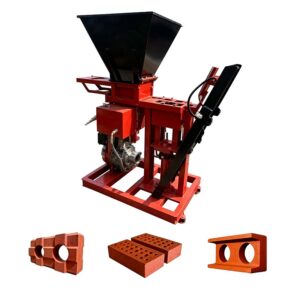
The QTS2-10 clay brick machine is a compact block-forming unit utilizing hydraulic transmission and automated control technologies. It primarily uses raw materials such as clay, shale, and fly ash to produce wall materials including standard bricks, hollow bricks, paving bricks, and interlocking blocks. Featuring a compact structure and user-friendly operation, this model is suitable for small-to-medium-sized brick plants, rural building material enterprises, and on-site brick production at construction projects.

Dimensions: Approx. 1,600 × 1,400 × 2,100 mm
Weight: Approx. 1,400–1,500 kg
Molding Cycle: Approx. 10 seconds

Overview

The QTS2-10 clay brick machine is a compact block-forming unit utilizing hydraulic transmission and automated control technologies. It primarily uses raw materials such as clay, shale, and fly ash to produce wall materials including standard bricks, hollow bricks, paving bricks, and interlocking blocks. Featuring a compact structure and user-friendly operation, this model is suitable for small-to-medium-sized brick plants, rural building material enterprises, and on-site brick production at construction projects.

In the model name “QTS2-10,” “QTS” designates the block-forming machine series, “2” indicates that two standard bricks are formed per cycle, and “10” signifies a molding cycle of approximately 10 seconds. The machine employs a hydraulic system to provide molding pressure and a PLC control system for semi-automatic or fully automatic operation; this setup ensures brick density and dimensional accuracy while effectively reducing manual labor intensity.

Key Advantages

The QTS2-10 clay brick machine offers several distinct advantages:

Hydraulic compression for high brick strength. The forming pressure delivered by the hydraulic system far exceeds that of standard vibration-based equipment. The resulting bricks are dense and possess high initial strength, which minimizes breakage rates during subsequent handling and curing.

Automated control for ease of operation. The PLC control system simplifies operation, allowing users to get up to speed with minimal training. High levels of automation reduce the need for manual intervention and lower labor intensity.

Versatility and flexible mold changing. By swapping molds, a single machine can produce a variety of brick types—including standard bricks, hollow bricks, pavers, and interlocking blocks—to meet diverse market demands.

Compact structure and site adaptability. The machine is lightweight and compact, requiring minimal factory space and foundation work. This makes it ideal for users with limited space and facilitates easy relocation or transfer between sites.

Excellent cost-performance ratio. Compared to large-scale fully automated production lines, the QTS2-10 has a lower purchase cost and a short payback period, making it an ideal starter machine for new brick plants or small-scale building material enterprises.

Brick Types Produced

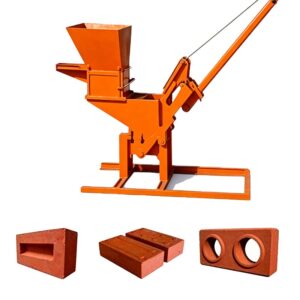
By changing molds, the QTS2-10 clay brick machine can produce the following types of brick products:

· Standard solid bricks: Common sizes such as 240×115×53 mm; used for load-bearing or infill walls.

· Perforated/hollow bricks: Sizes such as 390×190×190 mm; used for frame structure infill or non-load-bearing walls, offering benefits like reduced dead weight and improved thermal/acoustic insulation.

· Pavers/paving bricks: Sizes such as 200×100×60 mm and 200×200×60 mm; used for paving sidewalks, plazas, and courtyards.

· Interlocking blocks: Bricks with interlocking designs; used for projects such as retaining walls and slope protection.

· Kerbstones/curbstones: Used for edging and delineating roadways. The specific brick types that can be produced depend on the mold configuration; users can select the appropriate mold setup based on target market demands.

Application Scenarios

The QTS2-10 clay brick machine is primarily suitable for the following scenarios:

Small and medium-sized brick plants. Serving as the core molding equipment, it can establish production capacity when paired with a simple curing area, making it ideal for building material manufacturers at the county or township level.

On-site brick production at construction sites. Compact and portable, the machine allows for the direct production of required bricks at the construction site, thereby reducing transportation costs—a feature particularly beneficial for projects in remote areas.

Construction waste recycling. When combined with appropriate raw material processing, the machine can utilize construction debris, slag, fly ash, and other waste materials to produce recycled bricks, facilitating resource recycling.

Small to medium-sized overseas projects. This model is widely used in regions such as Southeast Asia, Africa, and South America, meeting local demands for brick products in infrastructure and housing projects.

Selection and Usage Recommendations

Raw material adaptability. Although commonly referred to as a “clay brick machine,” actual production is not limited to pure clay. To achieve optimal molding results and product strength, it is usually necessary to mix the clay with appropriate amounts of cement, lime, or other cementing agents to create a “clay-cement” or “clay-lime” mixture. Users should determine the ideal mix ratio through testing based on local raw material characteristics and product specifications.

The importance of curing. While hydraulically molded green bricks possess high initial strength, they require adequate curing to reach their design strength. Natural curing typically takes 7 to 14 days, during which time the bricks should be protected from rain and direct, intense sunlight. The quality of curing conditions directly impacts the product pass rate.

Mold selection determines product structure. When purchasing the equipment, users should identify their flagship brick types based on target market needs and configure the corresponding molds. Additional molds can be purchased later to expand the product line in response to market changes.

After-sales service and spare parts supply. Buyers should consider the supplier’s after-sales capabilities, including technical support, spare parts availability, and maintenance response times. The machine features a relatively simple structure; routine maintenance focuses primarily on the hydraulic system and mold inspection, resulting in low maintenance costs.
Operation

The QTS2-10 clay brick machine weighs approximately 1,400 to 1,500 kg and measures roughly 1,600 × 1,400 × 2,100 mm (L × W × H). Its compact design requires minimal floor space, facilitating installation and use in areas with limited room. Constructed using GB Q235 standard steel, the machine features key structural components processed via CO2 shielded welding and high-precision machining to ensure structural rigidity and durability.

Core components include a PLC programmable controller, a hydraulic pump station, an electric motor, and a gear transmission mechanism. The hydraulic system delivers stable molding pressure to ensure uniform brick density, while the PLC system coordinates the timing of actuating components, maintaining consistency across molding cycles and ensuring stable product quality. Molds are manufactured using heat treatment and wire-cut EDM processes, offering high precision and excellent wear resistance to meet long-term production demands.

The equipment supports customization of colors and mold specifications. Electrical components—such as AC contactors—are sourced from reputable brands like Shihlin and Schneider to enhance overall machine reliability.

Working Principle

The QTS2-10 clay brick machine operates based on a combination of hydraulic pressing and vibration molding. The equipment’s operating process is as follows:

Step 1: Material Filling. The proportioned and mixed clay or raw material mixture enters the mold cavity via a hopper. The moisture content and mix ratio of the raw materials are controlled according to the specific requirements of the brick type.

Step 2: Vibration and Pressing. The hydraulic system drives the press head downward to apply pressure to the material within the mold, while a vibration unit assists in air evacuation and material compaction. Hydraulic pressure causes the material particles to rearrange and bond tightly, forming a brick green body with sufficient structural strength.

Step 3: Demolding and Discharge. Once molding is complete, the press head retracts and the mold opens; the formed brick green body is ejected and conveyed to the curing area. The entire molding cycle takes approximately 10 seconds and operates continuously.

This hydraulic pressing method differs from traditional high-frequency vibration molding; it delivers higher molding pressure, resulting in greater initial strength and density for the brick green body, which facilitates subsequent curing and enhances the strength of the finished product.

Configuration

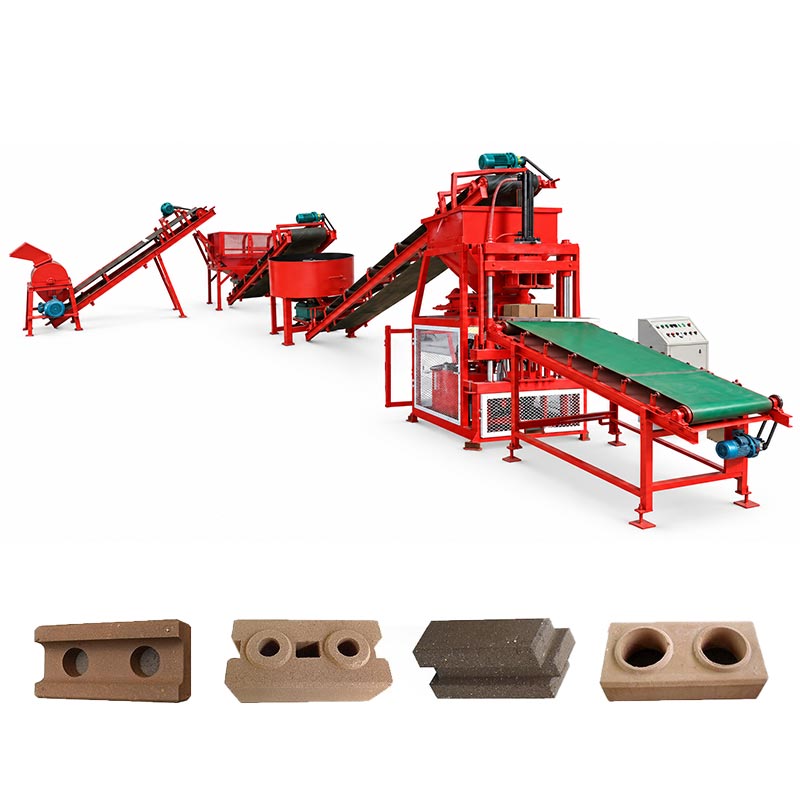
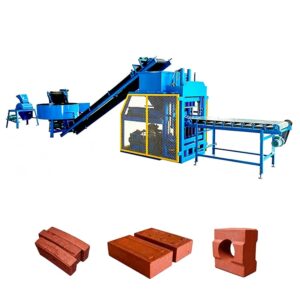
A complete QTS2-10 clay brick production line typically comprises the following equipment stages:

1.Raw Material Processing System: Includes crushers, mixers, and conveyor belts; responsible for crushing and screening raw materials (such as clay and shale) and mixing them with water to create a uniform mixture suitable for molding.

2.Main Molding Machine: The QTS2-10 brick machine itself, which performs the hydraulic molding of the brick units.

3.Brick Discharge and Conveying System: Discharges molded bricks from the main machine and transports them to the curing area via conveyor belts or pallets. Some configurations may include an automatic pallet stacker to enhance discharge efficiency.

4.Curing System: Molded bricks require a period of natural or steam curing to achieve the strength necessary for dispatch. The curing stage significantly impacts the quality of the final product.

5.Auxiliary Equipment: Includes the hydraulic station, electrical control cabinet, pneumatic components (if equipped), and pallets. Pallets are typically made of wood or plastic, and their dimensions must match the equipment specifications.

Depending on user requirements and budget, the production line can be configured as a simple semi-automatic system or upgraded to a higher level of automation.

Specification

ModelQTS2-10
Molding MethodHydraulic pressing
Molding CycleApprox. 10 seconds
Output per Cycle2 blocks (standard bricks)
Theoretical OutputApprox. 5,760 blocks / 8 hours
Total PowerDepends on configuration
Machine WeightApprox. 1,400–1,500 kg
Overall DimensionsApprox. 1,600 × 1,400 × 2,100 mm
Voltage380V/440V/415V/220V (selectable)
Control SystemPLC automatic control
Pallet SizeSubject to mold configuration
Warranty Period1 year

Note: The specifications above are based on the actual factory configuration; variations may occur between different batches or customized models.

Capacity

Actual output varies with brick size, raw-material moisture, operator workflow and the selected production-line configuration.

Molding CycleApprox. 10 seconds
Output per Cycle2 blocks (standard bricks)
Theoretical OutputApprox. 5,760 blocks / 8 hours

Find the Right Brick Machine

Tell us your block type, target capacity, and budget. Our engineers will recommend the right production solution for your project.

GET FREE QUOTE

Contact Form Demo

By changing molds, the machine can produce hollow blocks, solid blocks, paving bricks, interlocking pavers, curbstones and other concrete products.

Common materials include cement, sand, crushed stone, fly ash, slag and other locally available aggregates. The exact mix depends on the required block strength and finish.

Yes. We can recommend or customize the machine configuration, mold design, production capacity and automation level according to your block samples and factory conditions.

Standard supply normally includes the main block machine, control system and selected mold. Mixers, conveyors, pallet systems and other auxiliary equipment can be added as required.

Yes. We provide installation guidance, commissioning, operator training, technical support and spare-parts service. Remote and on-site support options are available.

GET FREE QUOTE

Contact Form Demo