



Aperçu
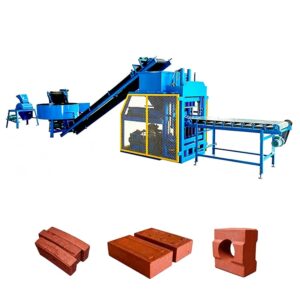
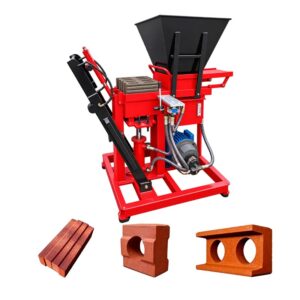
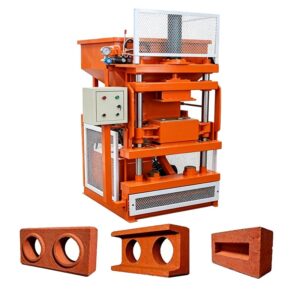
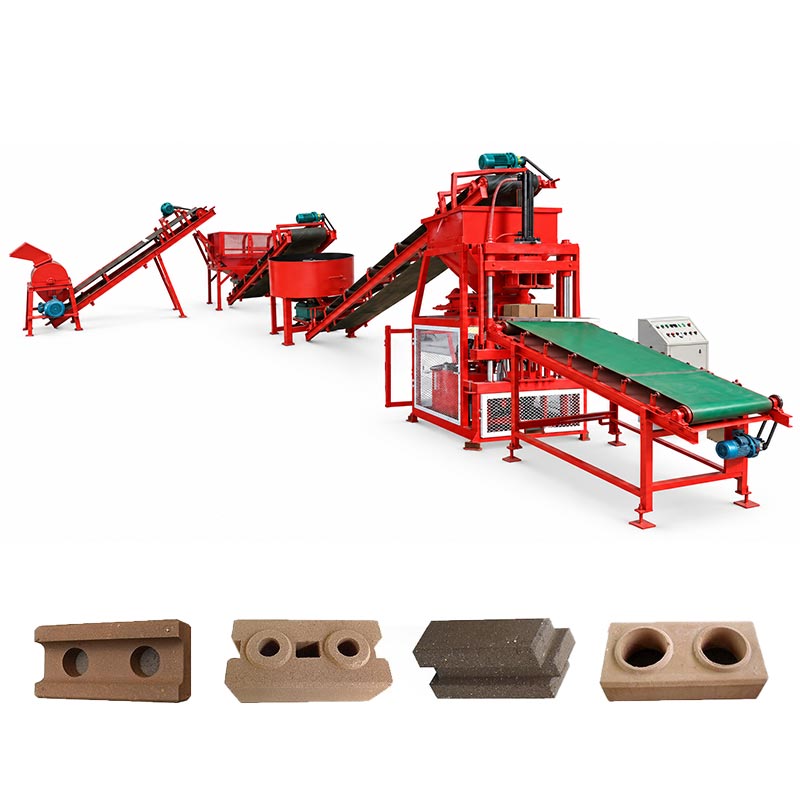
La machine à briques d'argile QTS2-10 est une unité compacte de formage de blocs utilisant des technologies de transmission hydraulique et de contrôle automatisé Elle utilise principalement des matières premières telles que l'argile, le schiste et les cendres volantes pour produire des matériaux de mur comprenant des briques standard, des briques creuses, des briques de pavage et des blocs imbriqués Doté d'une structure compacte et d'un fonctionnement convivial, ce modèle convient aux usines de briques de petite à moyenne taille, aux entreprises rurales de matériaux de construction et à la production de briques sur site lors de projets de construction.
Dans le nom du modèle “QTS2-10,” “QTS” désigne la série de machines de formage de blocs, “2” indique que deux briques standard sont formées par cycle, et “10” signifie un cycle de moulage d'environ 10 secondes La machine emploie un système hydraulique pour fournir la pression de moulage et un système de contrôle PLC pour un fonctionnement semi-automatique ou entièrement automatique ; cette configuration assure la densité de la brique et la précision dimensionnelle tout en réduisant efficacement l'intensité du travail manuel.
Avantages clés
La machine à briques en argile QTS2-10 offre plusieurs avantages distincts :
Compression hydraulique pour une résistance élevée de la brique La pression de formage délivrée par le système hydraulique dépasse de loin celle des équipements standard basés sur les vibrations Les briques résultantes sont denses et possèdent une résistance initiale élevée, ce qui minimise les taux de rupture lors de la manipulation et du durcissement ultérieurs.
Contrôle automatisé pour faciliter l'opération Le système de contrôle PLC simplifie l'opération, permettant aux utilisateurs de se mettre à niveau avec un minimum de formation Des niveaux élevés d'automatisation réduisent le besoin d'intervention manuelle et une intensité de main-d'œuvre plus faible.
Polyvalence et changement de moule flexible En échangeant des moules, une seule machine peut produire une variété de types de briques, notamment des briques standard, des briques creuses, des briques creuses et des blocs imbriqués, pour répondre aux diverses demandes du marché.
Structure compacte et adaptabilité du site La machine est légère et compacte, nécessitant un espace d'usine et un travail de fondation minimes Cela la rend idéale pour les utilisateurs avec un espace limité et facilite la relocalisation ou le transfert entre les sites.
Excellent rapport coût-performance Par rapport aux lignes de production entièrement automatisées à grande échelle, le QTS2-10 a un coût d'achat inférieur et une courte période de récupération, ce qui en fait une machine de démarrage idéale pour les nouvelles usines de briques ou les petites entreprises de matériaux de construction.
Types de briques produits
En changeant de moule, la machine à briques d'argile QTS2-10 peut produire les types de produits de briques suivants :
· Briques pleines standard : tailles courantes telles que 240.115.53 mm ; utilisé pour les murs porteurs ou de remplissage.
· Briques perforées/creuses : tailles telles que 390.190.190 mm ; utilisé pour les murs de remplissage ou non porteurs de structures de cadre, offrant des avantages tels qu'un poids mort réduit et une isolation thermique/acoustique améliorée.
· Pavés/pavés : Tailles telles que 200×100×60 mm et 200×200×60 mm ; utilisé pour paver les trottoirs, les places et les cours.
· Blocs imbriqués : Briques avec des conceptions imbriquées ; utilisé pour des projets tels que les murs de soutènement et la protection des pentes.
· Pierres de bordure/curbstones : utilisées pour le bordage et la délimitation des chaussées Les types de briques spécifiques qui peuvent être produits dépendent de la configuration du moule ; les utilisateurs peuvent sélectionner la configuration appropriée du moule en fonction des demandes cibles du marché.
Scénarios d'application
La machine à briques d'argile QTS2-10 convient principalement aux scénarios suivants :
Usines de briques de petite et moyenne taille Servant d'équipement de moulage de base, il peut établir la capacité de production lorsqu'il est associé à une simple zone de durcissement, ce qui le rend idéal pour les fabricants de matériaux de construction au niveau du comté ou du canton.
Production de briques sur site sur les chantiers Compacte et portable, la machine permet la production directe des briques requises sur le chantier, réduisant ainsi les coûts de transport caractéristique particulièrement bénéfique pour les projets dans les régions éloignées.
Recyclage des déchets de construction Lorsqu'elle est combinée à un traitement approprié des matières premières, la machine peut utiliser des débris de construction, des scories, des cendres volantes et d'autres déchets pour produire des briques recyclées, facilitant ainsi le recyclage des ressources.
Projets à l'étranger de petite à moyenne dimension Ce modèle est largement utilisé dans des régions telles que l'Asie du Sud-Est, l'Afrique, et l'Amérique du Sud, répondant aux demandes locales de produits en briques dans les projets d'infrastructure et de logement.
Sélection et recommandations d'utilisation
Adaptabilité des matières premières Bien que communément appelée machine à briques d'argile, la production réelle de“ ne se limite pas à l'argile pure Pour obtenir des résultats de moulage et une résistance du produit optimaux, il est généralement nécessaire de mélanger l'argile avec des quantités appropriées de ciment, de chaux ou d'autres agents de cimentation pour créer un mélange d'argiles-ciment” ou d“”clay-lime“ Les utilisateurs doivent déterminer le rapport de mélange idéal par des tests basés sur les caractéristiques locales des matières premières et les spécifications du produit.
L'importance du durcissement Alors que les briques vertes moulées hydrauliquement possèdent une résistance initiale élevée, elles nécessitent un durcissement adéquat pour atteindre leur résistance de conception Le durcissement naturel prend généralement 7 à 14 jours, période pendant laquelle les briques doivent être protégées de la pluie et de la lumière directe et intense du soleil La qualité des conditions de durcissement a un impact direct sur le taux de passage du produit.
La sélection des moules détermine la structure du produit Lors de l'achat de l'équipement, les utilisateurs doivent identifier leurs types de briques phares en fonction des besoins du marché cible et configurer les moules correspondants Des moules supplémentaires peuvent être achetés ultérieurement pour élargir la gamme de produits en réponse aux changements du marché.
Service après-vente et fourniture de pièces de rechange Les acheteurs doivent tenir compte des capacités après-vente du fournisseur, notamment le support technique, la disponibilité des pièces de rechange et les temps de réponse à la maintenance La machine présente une structure relativement simple ; l'entretien courant se concentre principalement sur le système hydraulique et l'inspection des moules, ce qui entraîne de faibles coûts d'entretien.