



Descripción general
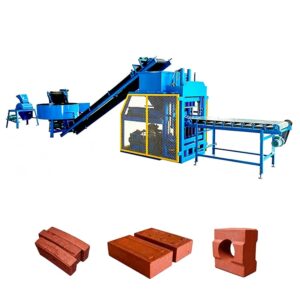
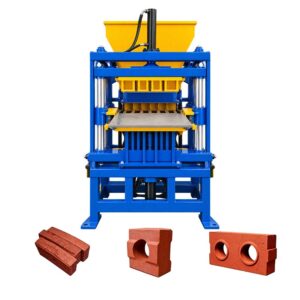
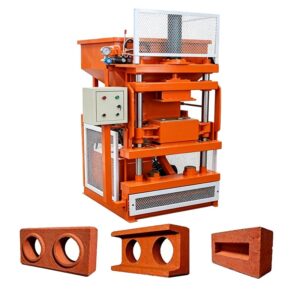
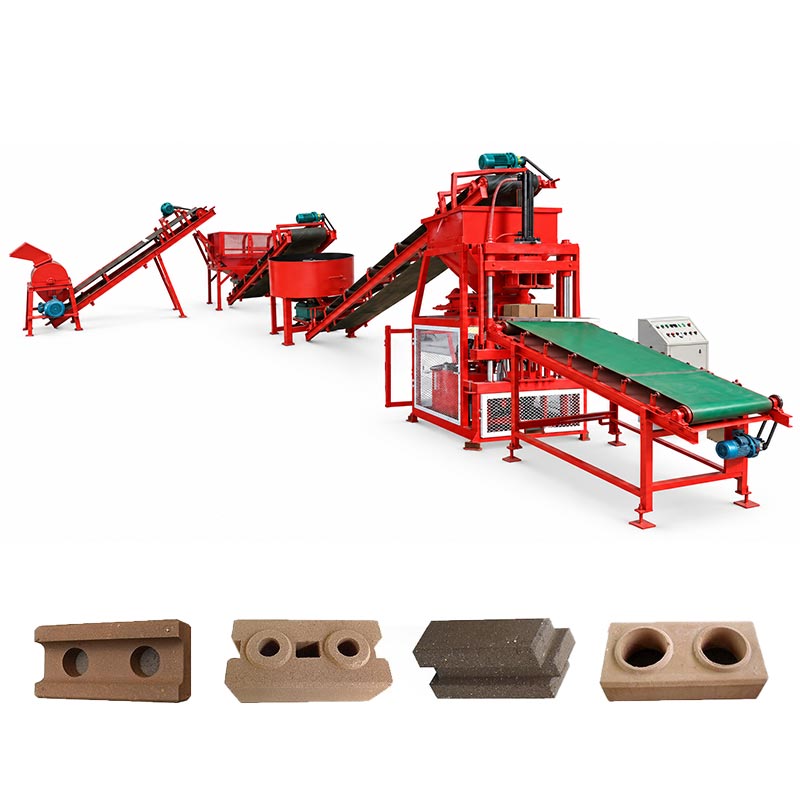
La máquina de ladrillos de arcilla QTS2-10 es una unidad compacta de formación de bloques que utiliza transmisión hidráulica y tecnologías de control automatizado. Utiliza principalmente materias primas como arcilla, esquisto y cenizas volantes para producir materiales para paredes, incluidos ladrillos estándar, ladrillos huecos, adoquines y bloques entrelazados. Con una estructura compacta y una operación fácil de usar, este modelo es adecuado para plantas de ladrillos de tamaño pequeño a mediano, empresas rurales de materiales de construcción y producción de ladrillos in situ en proyectos de construcción.
In the model name “QTS2-10,” “QTS” designates the block-forming machine series, “2” indicates that two standard bricks are formed per cycle, and “10” signifies a molding cycle of approximately 10 seconds. The machine employs a hydraulic system to provide molding pressure and a PLC control system for semi-automatic or fully automatic operation; this setup ensures brick density and dimensional accuracy while effectively reducing manual labor intensity.
Ventajas clave
The QTS2-10 clay brick machine offers several distinct advantages:
Hydraulic compression for high brick strength. The forming pressure delivered by the hydraulic system far exceeds that of standard vibration-based equipment. The resulting bricks are dense and possess high initial strength, which minimizes breakage rates during subsequent handling and curing.
Automated control for ease of operation. The PLC control system simplifies operation, allowing users to get up to speed with minimal training. High levels of automation reduce the need for manual intervention and lower labor intensity.
Versatility and flexible mold changing. By swapping molds, a single machine can produce a variety of brick types—including standard bricks, hollow bricks, pavers, and interlocking blocks—to meet diverse market demands.
Compact structure and site adaptability. The machine is lightweight and compact, requiring minimal factory space and foundation work. This makes it ideal for users with limited space and facilitates easy relocation or transfer between sites.
Excellent cost-performance ratio. Compared to large-scale fully automated production lines, the QTS2-10 has a lower purchase cost and a short payback period, making it an ideal starter machine for new brick plants or small-scale building material enterprises.
Tipos de ladrillos producidos
By changing molds, the QTS2-10 clay brick machine can produce the following types of brick products:
· Standard solid bricks: Common sizes such as 240×115×53 mm; used for load-bearing or infill walls.
· Perforated/hollow bricks: Sizes such as 390×190×190 mm; used for frame structure infill or non-load-bearing walls, offering benefits like reduced dead weight and improved thermal/acoustic insulation.
· Pavers/paving bricks: Sizes such as 200×100×60 mm and 200×200×60 mm; used for paving sidewalks, plazas, and courtyards.
· Interlocking blocks: Bricks with interlocking designs; used for projects such as retaining walls and slope protection.
· Kerbstones/curbstones: Used for edging and delineating roadways. The specific brick types that can be produced depend on the mold configuration; users can select the appropriate mold setup based on target market demands.
Escenarios de aplicación
The QTS2-10 clay brick machine is primarily suitable for the following scenarios:
Small and medium-sized brick plants. Serving as the core molding equipment, it can establish production capacity when paired with a simple curing area, making it ideal for building material manufacturers at the county or township level.
On-site brick production at construction sites. Compact and portable, the machine allows for the direct production of required bricks at the construction site, thereby reducing transportation costs—a feature particularly beneficial for projects in remote areas.
Construction waste recycling. When combined with appropriate raw material processing, the machine can utilize construction debris, slag, fly ash, and other waste materials to produce recycled bricks, facilitating resource recycling.
Small to medium-sized overseas projects. This model is widely used in regions such as Southeast Asia, Africa, and South America, meeting local demands for brick products in infrastructure and housing projects.
Selection and Usage Recommendations
Raw material adaptability. Although commonly referred to as a “clay brick machine,” actual production is not limited to pure clay. To achieve optimal molding results and product strength, it is usually necessary to mix the clay with appropriate amounts of cement, lime, or other cementing agents to create a “clay-cement” or “clay-lime” mixture. Users should determine the ideal mix ratio through testing based on local raw material characteristics and product specifications.
The importance of curing. While hydraulically molded green bricks possess high initial strength, they require adequate curing to reach their design strength. Natural curing typically takes 7 to 14 days, during which time the bricks should be protected from rain and direct, intense sunlight. The quality of curing conditions directly impacts the product pass rate.
Mold selection determines product structure. When purchasing the equipment, users should identify their flagship brick types based on target market needs and configure the corresponding molds. Additional molds can be purchased later to expand the product line in response to market changes.
After-sales service and spare parts supply. Buyers should consider the supplier’s after-sales capabilities, including technical support, spare parts availability, and maintenance response times. The machine features a relatively simple structure; routine maintenance focuses primarily on the hydraulic system and mold inspection, resulting in low maintenance costs.