



Overview
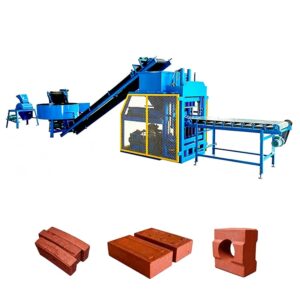
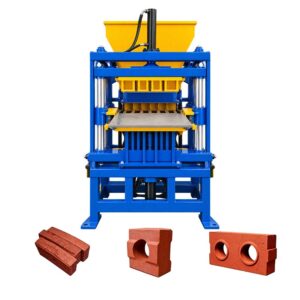
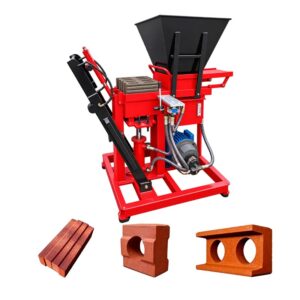
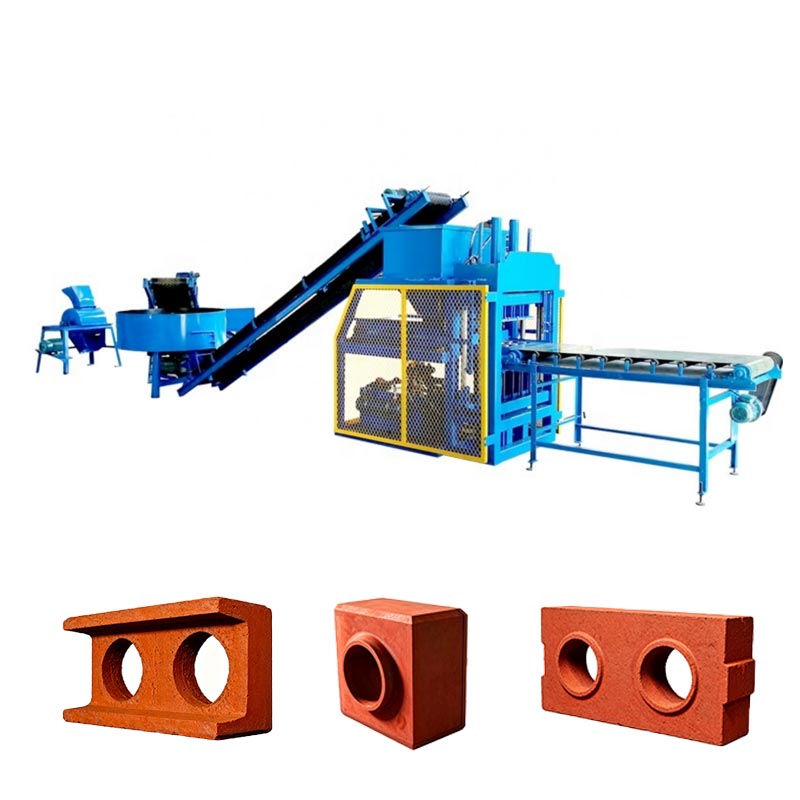
The QTS5-10 fully automatic hydraulic clay brick machine is a high-output, five-mold, non-fired clay brick production unit. As a core model for medium-scale operations, it excels in production capacity, stability, and cost-effectiveness within the clay interlocking brick equipment sector. Capable of stably molding five standard interlocking clay bricks per cycle, it offers a higher level of automation than conventional two- or four-mold models. It is ideally suited for mass production at small-to-medium brick plants, bulk supply for contractors, and large-scale rural infrastructure projects overseas.
The machine utilizes local red soil, clay, or loam as primary raw materials, requiring only a small amount of cement for the mix. It eliminates the need for firing, kilns, or high-temperature processing; instead, it relies on high-pressure hydraulic molding and natural curing to produce construction bricks, slope protection bricks, and paving bricks that meet quality standards. Equipped with a PLC fully automatic control system, an independent high-pressure hydraulic station, and a vibration-compaction system, the machine ensures rapid molding speeds, uniform brick density, and high product strength. It employs a proven pallet-free, ground-molding process—where green bricks are placed directly on the ground for curing—thereby eliminating the cost and wear associated with pallets and significantly reducing long-term production expenses. It supports both industrial electric and diesel power configurations, making it perfectly suited for regions with unstable power grids, such as parts of Africa, Southeast Asia, and South America; it is a popular, high-output model for the export market.
Core Product Advantages
1. Ultra-high 5-mold capacity: Leading production capacity in its class; enables rapid mass production and a short payback period, making it ideal for large-scale plant operations.
2. Stable quality via high-pressure molding: 25 MPa high-pressure compaction ensures high brick density and uniform hardness; bricks are resistant to cracking and deformation, ensuring high pass rates in project inspections.
3. Fully automated, intelligent operation: Features a one-touch PLC automatic cycle; eliminates the need for frequent manual intervention, reduces labor dependency, and supports long-term continuous production.
4. Low-cost production (pallet-free): Bricks are molded directly on the ground, eliminating the need for pallets; results in zero consumable costs during long-term operation.
5. Versatile application: Standard electric motor version suits established plant sites; can be retrofitted with diesel power for use in remote areas or locations without electricity.
6. Extremely low raw material costs: Utilizes locally sourced natural clay or red soil with only a small amount of cement added; raw material costs are negligible, allowing for high profit margins.
7. Multi-purpose with easy mold changes: Quickly switch molds to produce various brick types—including construction, paving, and slope protection bricks—offering strong market adaptability.
8. Rugged and durable construction: Features a reinforced welded frame and wear-resistant alloy steel molds; ensures low failure rates, a long service life, and easy maintenance.
9. Eco-friendly production: A completely non-firing process that generates no smoke or wastewater and operates with low noise; complies with international environmental regulations and qualifies for government infrastructure tenders.
Brick Types Produced
By changing to custom molds, the machine can produce a full range of non-fired clay blocks suitable for construction, municipal works, water conservancy, and landscaping:
1. Clay Interlocking “Lego” Bricks (Flagship Product): Feature interlocking mechanisms; save mortar; allow for rapid construction; widely used in overseas self-built housing.
2. Solid Clay Bricks & Hollow Wall Blocks: For residential walls, perimeter walls, and partition walls.
3. Rural Paving Bricks & Interlocking Courtyard Pavers: For surfacing rural roads, factory grounds, and residential walkways.
4. I-Shaped Interlocking Slope Protection Bricks: For eco-friendly slope protection in river channels, canals, and embankments.
5. Grass Pavers & Tree Pit Blocks: For park landscaping and eco-friendly parking lot construction.
6. Retaining Wall Blocks & Hydraulic Bank Protection Blocks: For slope retention, embankment reinforcement, and soil/water conservation.
7. Custom-Shaped Engineering Blocks: Molds can be customized based on client drawings.
Application Scenarios
1. Small-to-Medium Scale Brick Plants: Batch production of clay bricks for local wholesale and stable supply.
2. Construction Contractors: Rural housing and centralized housing development projects.
3. Water Conservancy & Soil Conservation Projects: Large-scale production of eco-friendly slope and bank protection blocks.
4. Rural Revitalization Infrastructure: Production of building materials for road surfacing, residential construction, and village landscape upgrades.
5. Long-term Building Material Ventures: Investment in standardized production lines prioritizing high capacity, stability, and profitability.
Model Selection & Usage Recommendations
1. Selection Recommendations: Choose QTS1-10 or QTS2-25 for small-scale, low-volume operations; choose QTS4-10 for medium-volume production; prioritize QTS5-10 for stable, large-scale production (offers high capacity and excellent cost-performance).
2. Raw Material Requirements: Clay must be crushed and screened; stones and hard objects must be strictly prevented from entering the mold to protect the mold and minimize defective products.
3. Process Adjustment: Fine-tune the mix ratio and pressing pressure based on the moisture content of the local soil to ensure the brick bodies are smooth and free of cracks.
4. On-site Curing: The production area must have a hardened, level surface with ample space designated for curing; stack brick bodies in separate zones and allow them to cure for 7–14 days before shipment.
5. Routine Maintenance: Perform daily checks of hydraulic fluid and bolt tightness, clean residual soil from molds, and conduct regular maintenance on the hydraulic system to extend equipment lifespan.
6. Production Recommendations: Implement a continuous two-shift production schedule to maximize the high-output advantages of the five-mold system, thereby boosting overall production volume and economic returns.