



Descripción general
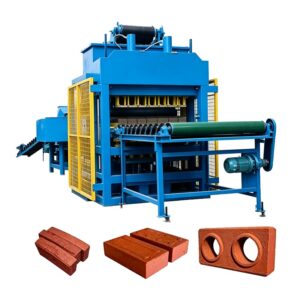
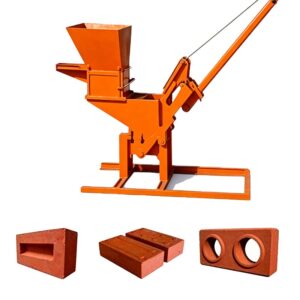
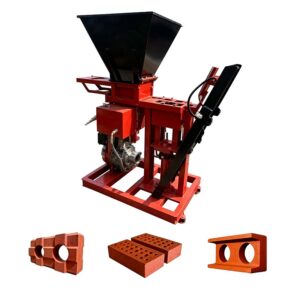
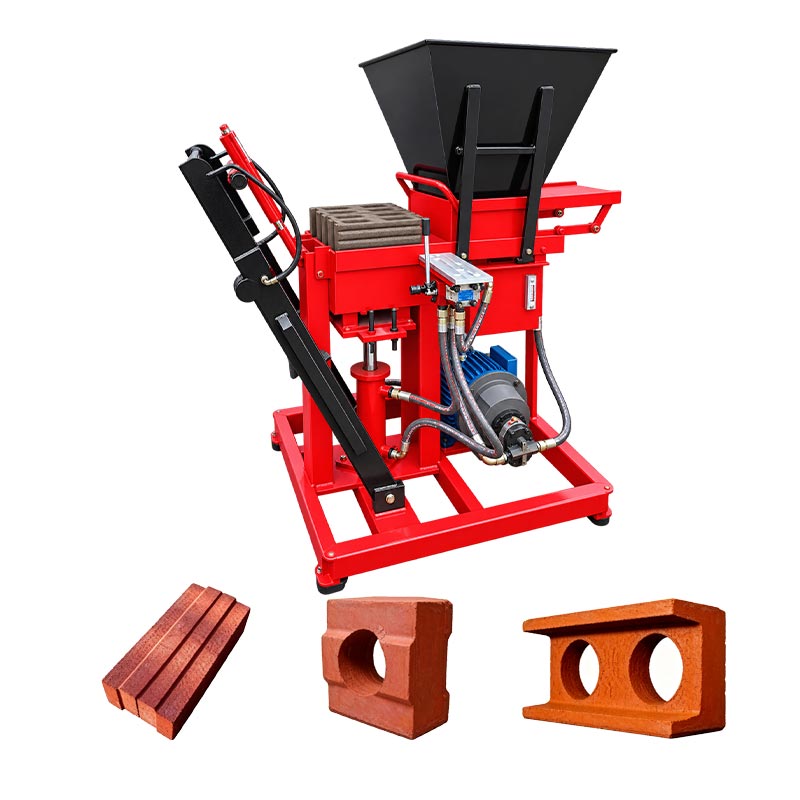
La QTS2-25 es una máquina de moldeo de bloques entrelazados de arcilla hidráulica, no cocida y de doble molde. Capaz de producir dos ladrillos por ciclo, ofrece una eficiencia significativamente mayor que los modelos de un solo molde, lo que la convierte en una opción principal y rentable para plantas de ladrillos y contratistas de ingeniería extranjeros de tamaño pequeño a mediano. Utilizando tierra roja, arcilla o marga como materia prima primaria “mezclada con una pequeña cantidad de cemento “la máquina da forma a los bloques mediante compresión hidráulica de alta presión. No se requiere cocción en horno; Una vez desmoldados, los ladrillos alcanzan resistencia estructural mediante curado con aire natural.
The machine features a semi-automated hydraulic control system and offers a choice of electric motor or diesel engine power, making it suitable for remote areas with unstable power grids or a lack of industrial electricity. It employs a pallet-free, ground-casting process where bricks are molded directly onto a hardened surface, eliminating the costs associated with purchasing and replacing pallets and thereby reducing long-term operating expenses. With a compact footprint and easy mold-swapping capabilities, the machine can produce a variety of products—including interlocking building bricks, pavers, and slope protection blocks—by simply changing molds. It offers a moderate barrier to entry for production and is widely exported to regions rich in red soil resources, such as Africa, Southeast Asia, and Central/South America, making it ideal for family-run workshops and small-to-medium-sized building material plants.
2. Product Details
The main unit of the QTS2-25 features a robust, fully welded frame made of heavy-gauge structural steel, designed to resist deformation under high pressure; its substantial weight ensures stability during prolonged, continuous operation. The complete system comprises the main unit, an independent hydraulic station, a material hopper and feeding mechanism, a mold assembly, and an electrical control unit. Hydraulic cylinders drive the entire process—material feeding, compression, and demolding—while auxiliary vibration enhances material compaction, ensuring uniform density across both bricks. During production, pre-treated raw materials are fed into a hopper, which automatically distributes the material to fill the dual-mold cavities. A hydraulic system applies high downward pressure to compact the material and expel internal air. Once molding is complete, the mold frame descends to automatically release the bricks; the two green bricks are deposited directly onto the ground, requiring workers only to transport and stack them for curing. Both hydraulic pressure and brick molding height are adjustable, allowing process parameters to be fine-tuned based on local clay soil quality and moisture content. The molds are made of wear-resistant alloy steel and are easy to disassemble; general workers can perform mold changes after brief training. The intuitive electronic control panel allows for real-time monitoring of equipment status, simplifying troubleshooting and maintenance. A diesel-powered version enables off-grid operation, and the equipment features highly interchangeable parts, ensuring easy spare-part procurement for overseas customers and low long-term maintenance costs.
7. Core Product Advantages
1. Dual-mold molding for high efficiency: Produces two bricks per cycle, nearly doubling the output of single-mold models. Ideal for customers with stable orders who prioritize high productivity and a faster return on investment.
2. Adjustable high pressure for consistent quality: Pressing pressure is adjustable between 16–25 MPa. Simultaneous compression of two brick blanks ensures uniform density and high compressive strength, meeting standards for civil construction and general engineering projects.
3. Pallet-free ground molding: Saves on consumable costs. Bricks are placed directly on the ground for curing, eliminating the need to purchase, replace, or absorb losses associated with brick pallets.
4. Dual power options: Adaptable to various power supply conditions. The electric motor version suits areas with a stable grid, while the diesel version operates independently of the industrial grid, enabling production at remote construction sites or in rural areas.
5. Local raw materials for low production costs: Primarily utilizes local clay and red soil with minimal cement additives; raw materials are easily accessible and inexpensive.
6. Versatile with quick mold changes: Easily switch molds to produce blocks of various specifications, allowing the machine to handle diverse orders—from housing construction to roadworks and slope protection—thereby expanding business scope.
7. Robust, durable, and easy to maintain: Features a thickened, welded frame and wear-resistant alloy steel molds. Standardized wear parts ensure easy procurement of replacements, and the machine can be operated and maintained by workers with minimal training.
8. Eco-friendly, non-fired process: Complies with environmental regulations. Eliminates the need for kilns and produces no smoke emissions, aligning with environmental policies in most countries and facilitating participation in government infrastructure project tenders.
8. Brick Types Produced
By changing custom molds, a single machine can produce a variety of clay-based, non-fired blocks suitable for construction, municipal works, and hydraulic slope protection:
1. Clay interlocking “Lego-style” bricks (primary product): Dual-mold production creates interlocking blocks that snap together, saving mortar and accelerating construction speed; widely used for residential housing overseas.
2. Solid clay construction bricks: Used for building walls and perimeter fences.
3. Hollow clay blocks: Reduce wall dead weight and provide thermal insulation; used for interior partition walls.
4. Interlocking paving bricks: For courtyards, rural walkways, and factory roadways.
5. Hexagonal and I-shaped interlocking slope protection bricks: For eco-friendly slope protection on riverbanks, levees, and hydraulic engineering projects.
6. Grass pavers: For parking lots and green spaces in parks.
7. Retaining wall blocks: For slope retention and landslide prevention.
8. Tree pit bricks and simple curbstones: Ancillary products for landscaping and municipal projects.
9. Custom-shaped blocks: Dual-mold tooling can be developed from blueprints to produce engineering bricks with special specifications.
9. Application Scenarios
1. Small-to-medium family-run brickyards and independent building material workshops: Scalable production of non-fired clay bricks for local sales and steady supply to the regional housing construction market.
2. Overseas engineering contractors: Housing aid and rural infrastructure projects in Africa, Southeast Asia, and South America; equipment can be transported directly to the site for on-demand brick production, significantly reducing material transportation costs.
3. Hydraulic and soil conservation projects: Production of eco-friendly slope protection blocks for river embankments, canals, and reservoir slope stabilization.
4. Rural housing projects: Localized production facilities supplying interlocking bricks for self-built homes in surrounding rural areas.
5. Landscaping projects: Production of paving bricks, grass pavers, and retaining wall blocks for landscape architecture and park development.
Selection and Usage Recommendations
1. Model Selection: Compared to the single-mold QTS1-10, the QTS2-25 is better suited for customers with higher production capacity requirements and stable order volumes. For sporadic orders or limited budgets, the single-mold model is a preferable choice. If higher automation is desired, one can upgrade to large-scale, fully automatic clay brick-making equipment.
2. Raw Material Requirements: Clay raw materials must be crushed and screened to remove stones and hard debris; failure to do so will cause rapid mold wear. Moisture content must be strictly controlled; excessive moisture causes brick deformation, while insufficient moisture leads to loose, structurally weak bricks.
3. Staffing: A complete semi-automated production line typically requires 2–3 workers, assigned to raw material processing, main machine operation, and brick transfer/stacking; avoid overloading a single operator.
4. Site and Curing: The ground must be paved (hardened) to accommodate brick demolding, and a sufficiently large area must be reserved for natural brick curing. Protect bricks from rain during the curing period and allow 7–14 days of curing before dispatch or use.
5. Daily Maintenance: Check hydraulic oil levels daily, regularly tighten bolts, and apply protective coatings to molds. For diesel models, perform regular engine maintenance. Stop the machine immediately to troubleshoot any abnormal pressure readings; do not operate the equipment while a fault exists.
6. Mold Usage: Prioritize the use of original wear-resistant alloy steel molds. For dual-mold setups, both mold cavities require synchronized maintenance to prevent uneven wear, which could result in quality discrepancies between the two finished bricks.
7. Post-Sales and Commissioning: Upon delivery, complete installation and commissioning according to manufacturer guidelines, and ensure operators undergo comprehensive training before commencing production. Use original spare parts for replacements to ensure the equipment’s long-term, stable operation.