



Overview
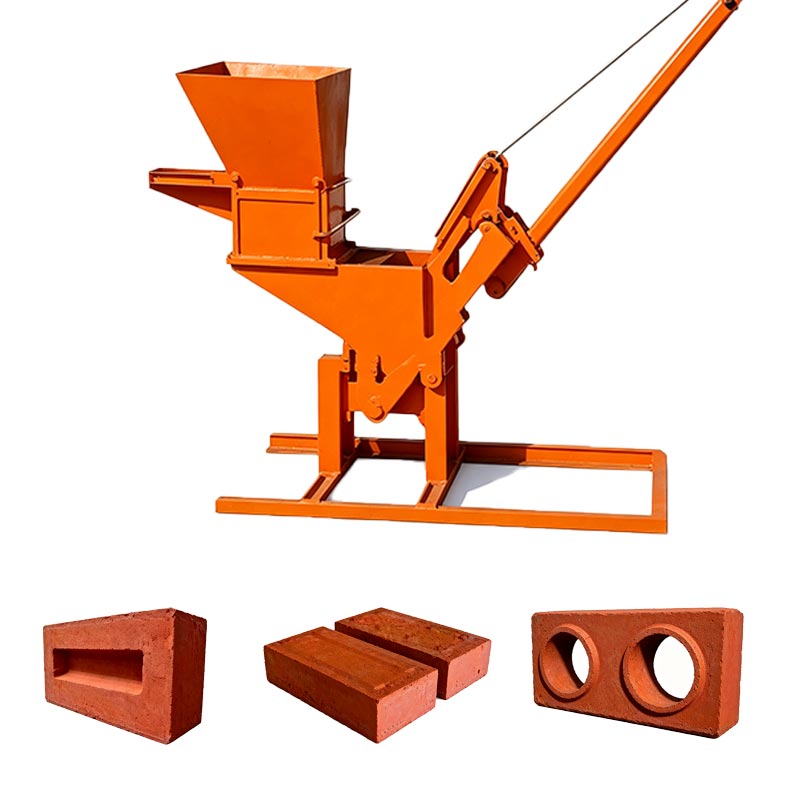
The QTS2-40 clay brick machine is a fully manual, dual-mold, non-fired clay brick-making unit. It is a lightweight, zero-electricity, and cost-effective entry-level model designed specifically for areas without power grids, remote villages, and small-scale infrastructure projects. Requiring neither electric motors nor diesel engines, the machine operates via manual leverage to compress and form bricks, effectively solving the challenge of setting up production facilities in off-grid regions. Its core advantage lies in its dual-mold design, capable of producing two clay bricks per cycle—offering productivity far superior to single-mold manual machines—while maintaining extremely low investment costs, portability, and ease of use for beginners.
The machine utilizes natural red earth, clay, or loam as primary raw materials, mixed with a small amount of cement. It eliminates the need for high-temperature kiln firing, relying instead on physical high-pressure compression; bricks can be used after natural curing. Compact, lightweight, and highly mobile, the unit allows for easy relocation of production sites. It is ideally suited for infrastructure, residential construction, and small-scale slope protection projects in remote areas of Africa, Southeast Asia, and South America. It is a popular choice for low-cost overseas entrepreneurship and small infrastructure projects, as well as the preferred entry-level model for newcomers to the building materials industry.
Core Product Advantages
1. Zero-power operation, suitable for off-grid areas: Purely manual operation requiring neither electricity nor fuel; perfectly suited for remote areas lacking power grids or experiencing frequent outages, with a much wider range of applications than electric equipment.
2. Dual-mold high output, exceptional cost-performance: Produces two bricks per molding cycle—doubling the capacity of single-mold manual machines—combined with a low purchase price, the industry’s lowest startup costs, and a rapid return on investment.
3. Zero maintenance costs, ultra-low failure rate: Free from complex components like motors, hydraulics, or electronic controls; features a simple, robust structure with virtually no wear parts, requiring no maintenance over long-term use.
4. Highly portable, flexible production: Lightweight and compact, the machine can be easily relocated, making it ideal for mobile construction, remote infrastructure projects, and decentralized rural brick-making needs.
5. No consumable expenses: Direct-to-ground molding eliminates the need for brick pallets—saving on purchase and replacement costs—and ensures no hidden expenses for consumables during long-term production.
6. High raw material utilization: Uses locally sourced materials—requiring only local clay and a small amount of cement—resulting in extremely low material costs and significantly reduced production investment.
7. No prior experience required: No specialized technical skills needed; operators can get started with simple training. Suitable for use by the elderly or general laborers, keeping labor costs low.
8. Eco-friendly and compliant: Non-firing production process generates no noise, exhaust fumes, or waste discharge; fully compliant with environmental regulations for small-scale production worldwide, posing no environmental risks.
Brick Types Produced
By swapping out custom alloy steel molds, a single machine can produce various clay blocks commonly used in engineering projects across residential, municipal, and water conservancy sectors:
1. Clay Interlocking “Lego” Bricks (Flagship Product): Feature an interlocking mechanism that saves mortar and speeds up construction; ideal for rural self-built homes and boundary walls.
2. Clay Solid & Hollow Bricks: Standard bricks for residential walls, partitions, and boundary walls.
3. Small Paving & Courtyard Bricks: For surfacing rural paths, courtyards, and simple factory roadways.
4. Simple Interlocking Slope Protection Bricks: For small canals, embankments, and minor soil and water conservation projects.
5. Grass Pavers & Small Tree Pit Bricks: For rural greening and simple landscaping projects.
6. Custom Small Shaped Blocks: Molds with special specifications can be customized based on specific project requirements.
Application Scenarios
1. Small-Scale Rural Entrepreneurship: Suitable for individuals or families to set up small brick-making plants; low-cost production to supply local housing and boundary wall construction.
2. Infrastructure Projects in Remote, Off-Grid Areas: Housing construction, road surfacing, and slope protection in mountainous, rural, or wilderness areas lacking grid power.
3. Small-Scale Overseas Infrastructure Projects: Rural aid and livelihood infrastructure projects in Africa, Southeast Asia, and South America; on-site brick production reduces material transportation costs.
4. Temporary/Mobile Construction Projects: Short-term infrastructure, emergency housing, and small slope protection works; the equipment is easily relocated and adapts flexibly to temporary sites.
5. Entry-Level Building Material Production: A low-risk way for beginners to enter the brick-making industry without massive investment, offering stable, modest profits.
Model Selection & Usage Recommendations
1. Selection Advice: The QTS2-40 is the top choice for those with very limited budgets, no access to electricity, restricted space, or a need for small-scale production; it is the optimal solution for sporadic personal use or small-batch brick making. 2. Raw Material Preparation: Clay must be crushed and screened to remove stones and hard debris, preventing mold damage; moisture content must be strictly controlled to avoid brick deformation or crumbling.
3. Operational Guidelines: Apply pressure via the lever at a steady pace; avoid forceful, abrupt pressing to protect the machine frame and mold, thereby extending equipment lifespan; promptly clear residual material from the mold after each molding cycle.
4. Curing: Select a level site for production and stack green bricks in designated areas; protect them from heavy rain and physical impact during the curing period to ensure the finished product meets strength standards.
5. Equipment Maintenance: Regularly remove rust and repaint the machine body, and apply protective oil to the mold; the unit has no easily worn parts and requires only dry storage during long periods of inactivity.
6. Production Recommendations: Daily production can be handled by a single operator, while a two-person team (one for filling, one for pressing) can be utilized during peak periods to significantly boost efficiency.