



Шанман (Линьи) Машинери Ко, Лтд.

QTS1-10 Clay Brick Making Machine

QTS1-10 Clay Brick Making Machine

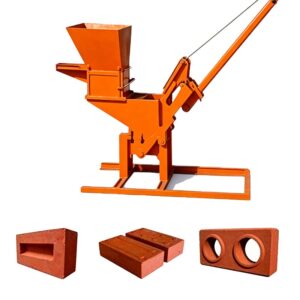
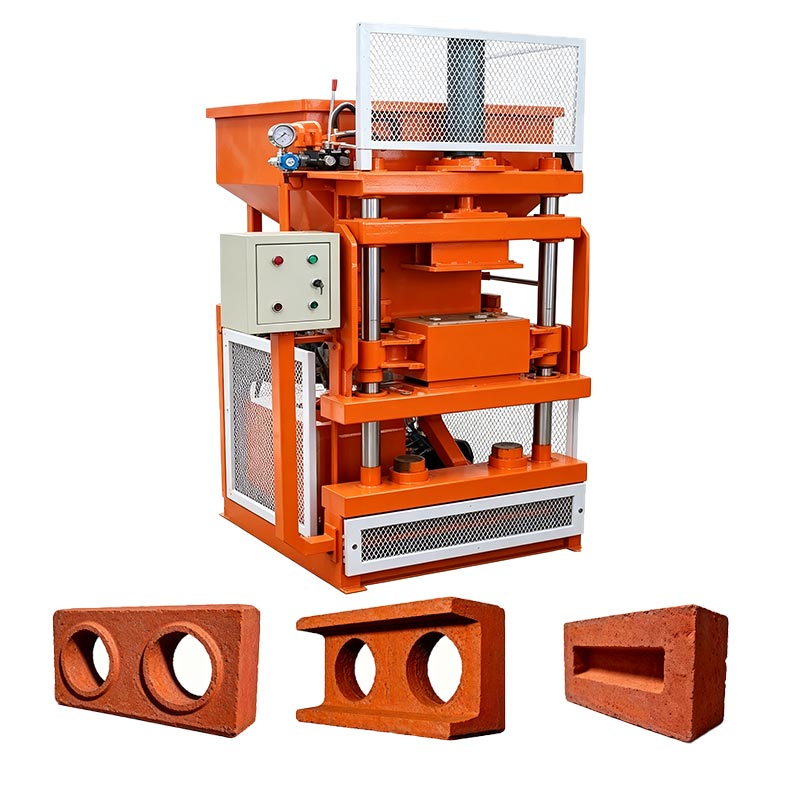
The QTS1-10 clay brick machine is a small-to-medium-sized hydraulic press designed to produce interlocking clay blocks. It utilizes clay, red soil, or general earth as primary raw materials, mixed with a small amount of cement. As the bricks are formed via compression rather than firing, the machine is classified as eco-friendly, non-fired brick-making equipment. Developed specifically for small-to-medium brickyards, rural infrastructure projects, and overseas markets (including Africa, Southeast Asia, and South America), the machine features a compact structure and a small footprint. It can be powered by electricity or an optional diesel engine, making it suitable for regions with unstable power supplies. Equipped with a PLC semi-automatic hydraulic control system, the machine integrates material feeding, compression molding, and automatic demolding. It produces one brick per cycle with a short molding time, requires minimal manpower, and offers a low investment threshold with quick returns, making it a popular choice for small building material processing plants.

Dimensions: 1600 × 1400 × 2100 mm
Weight: 850–1000 kg
Molding Cycle: 6–10 seconds/cycle

Overview

The QTS1-10 clay brick machine is a small-to-medium-sized hydraulic press designed to produce interlocking clay blocks. It utilizes clay, red soil, or general earth as primary raw materials, mixed with a small amount of cement. As the bricks are formed via compression rather than firing, the machine is classified as eco-friendly, non-fired brick-making equipment. Developed specifically for small-to-medium brickyards, rural infrastructure projects, and overseas markets (including Africa, Southeast Asia, and South America), the machine features a compact structure and a small footprint. It can be powered by electricity or an optional diesel engine, making it suitable for regions with unstable power supplies. Equipped with a PLC semi-automatic hydraulic control system, the machine integrates material feeding, compression molding, and automatic demolding. It produces one brick per cycle with a short molding time, requires minimal manpower, and offers a low investment threshold with quick returns, making it a popular choice for small building material processing plants.

The QTS1-10 is highly adaptable to various raw materials. Ordinary clay, red soil, or loam—combined with a small amount of cement and processed through crushing, screening, and mixing—can be pressed into various products such as high-density interlocking bricks, solid bricks, and hollow bricks. The resulting bricks are dense and possess high compressive strength; the interlocking bricks are easy to assemble and widely used in housing construction, boundary walls, slope protection, and road building. They are particularly well-suited for rural housing, poverty-alleviation construction projects, and hydraulic slope protection works. The machine operates without pallets, depositing formed bricks directly onto the ground; this eliminates pallet procurement costs and further reduces the customer’s initial investment, making it highly favored by small-to-medium investors.

Core Product Advantages

1. Low investment and quick setup: The total equipment cost is significantly lower than that of large-scale brick-making systems. It eliminates the need for brick kilns and the firing process—saving on high construction costs—and allows for production in open-air areas. With a rapid return on investment, it is ideal for small and medium-sized entrepreneurs.

2. Easy access to raw materials: Materials can be sourced locally (e.g., clay or red soil) with the addition of only a small amount of cement. Low procurement costs make it highly suitable for resource-rich overseas regions.

3. Versatile power options: Supports dual power sources (electric and diesel). The diesel option ensures uninterrupted production in areas with unstable power grids, such as parts of Africa.

4. Consistent quality and high strength: Uses 16 MPa high-pressure hydraulic molding to produce dense, high-strength bricks. The interlocking design ensures a tight fit, resulting in stable structures for housing and slope protection.

5. No pallets required: Freshly molded bricks are placed directly on the ground, eliminating the ongoing costs associated with purchasing, maintaining, and replacing pallets, thereby reducing long-term operating expenses.

6. Flexible mold changing and multi-purpose use: Quickly switch molds to produce various brick specifications. A single machine can manufacture bricks for housing, slope protection, and paving, meeting diverse order requirements.

7. Simple operation and maintenance: Features semi-automatic PLC control and a straightforward workflow, allowing workers to start after minimal training. The machine has a robust structure with few wear parts and easy-to-replace components, simplifying maintenance for overseas customers.

8. Strong environmental credentials: Utilizes a non-firing process with no high-temperature emissions. It complies with environmental regulations in many countries, providing a competitive edge when bidding for overseas projects.

Brick Types That Can Be Produced

By changing molds of various specifications, the QTS1-10 clay brick machine can produce a wide range of non-fired clay blocks suitable for applications such as residential construction, boundary walls, roadways, and hydraulic slope protection. The primary brick types include:

1. Clay Interlocking Bricks (Lego-style bricks): The flagship product; these feature an interlocking mechanism that eliminates the need for large amounts of mortar during wall construction, allowing for rapid building speeds—widely used in overseas residential housing.

2. Solid Clay Bricks: Standard construction bricks used for building walls and boundary walls.

3. Hollow Clay Blocks: Hollow bricks that reduce wall weight and offer thermal insulation properties; suitable for interior partition walls.

4. Paving Bricks and Interlocking Pavers: Paving units for courtyards, industrial sites, and rural walkways.

5. Hexagonal and I-shaped Interlocking Slope Protection Bricks: Eco-friendly slope protection units for riverbanks and dams; commonly used in hydraulic engineering projects.

6. Grass Pavers: Blocks designed to allow grass growth; used in parking lots and landscaped areas.

7. Retaining Wall Blocks: Blocks designed for retaining wall and slope stabilization projects.

8. Custom-shaped Bricks: Custom molds can be developed based on customer-provided drawings to produce bricks with special dimensions or shapes.
Application Scenarios and Summary

Operation

The main unit of the QTS1-10 clay brick machine features a fully welded frame, with the compression and demolding actions driven by a core hydraulic system. The complete production line centers on this main unit, complemented by raw material processing, mixing, and conveying units. The equipment operates by first crushing and screening raw materials to remove impurities such as stones, then feeding them into a mixer where water and cement are added and thoroughly blended. Once mixed, the material is conveyed to the main machine’s hopper, which feeds it into the mold cavity; a hydraulic cylinder then applies high downward pressure to compact the material into a brick blank. Subsequently, the mold frame automatically descends to release the brick, which is deposited directly onto the ground; manual labor then transfers the bricks to an open area for natural curing. No kiln firing is required, and the bricks achieve usable strength after 7–14 days of curing.

The equipment features a modular design, allowing for the production of bricks in various specifications and shapes simply by changing molds; the molds are easy to install and remove, enabling general workers to perform mold changes after minimal training. A pressure adjustment mechanism allows the hydraulic pressing force to be tailored to the raw material mix, while adjustable screws enable modification of the brick’s forming height to meet specific project thickness requirements. The control system is user-friendly, utilizing a push-button panel that displays operational status and facilitates rapid troubleshooting. To address power supply limitations in certain regions, the machine supports dual power options—electric motor or diesel engine—enabling production independent of the industrial power grid and significantly expanding the equipment’s range of applications. The machine utilizes highly interchangeable parts, making it convenient for overseas customers to source spare parts and perform maintenance.

Configuration

1. Raw Material Crusher: Used to crush large chunks and clods of clay and soil into fine particles and remove large stones, ensuring uniform mixing in subsequent stages.

2. Screening Equipment: Removes stones, grass roots, and other impurities from the soil to prevent hard materials from damaging the mold and to ensure the aesthetic quality of the finished bricks.

3. JQ350 Forced Mixer: Thoroughly mixes soil, cement, and water in the correct proportions to ensure uniform moisture content; this directly determines the quality of the brick molding and the strength of the finished product.

4. Belt Conveyor: Transports the mixed material to the main unit’s hopper, enabling automatic feeding and reducing the labor intensity associated with manual loading.

5. QTS1-10 Main Unit: The core equipment of the production line; it performs material distribution, high-pressure pressing, and automatic demolding/forming. The hydraulic system, cylinders, and PLC control module are all integrated into the main unit’s frame.

6. Hydraulic Station: Supplies stable hydraulic power to the main unit, ensuring consistent pressing pressure output.

7. Electrical Control Console: The control hub for the entire system, managing all operations including mixing, conveying, and forming.

The simplified production line can omit the automatic conveyor system in favor of manual feeding to lower initial procurement costs, making it suitable for customers with limited budgets. The fully automated production line mechanizes everything from raw material crushing to feeding; requiring only 2–3 operators, it offers higher production efficiency and is ideal for long-term, stable production. The production site requires only a level, hardened surface; no factory building is needed, as production can take place outdoors, with finished bricks stacked for natural curing after demolding.

Specification

ModelQTS1-10 Clay Interlocking Brick Machine
Molding Cycle6–10 seconds/cycle
Bricks per Cycle1 piece
Hydraulic Working Pressure16 MPa
Main Machine Power5.5–7.5 kW (Diesel power option available)
Operating Voltage380V, 50Hz (Customizable to local voltage standards)
Main Machine Dimensions1600 × 1400 × 2100 mm
Main Machine Weight850–1000 kg
Max. Molding Size400 × 300 × 200 mm (Customizable molds)
Demolding MethodAutomatic hydraulic demolding
Manpower Required2–3 persons (full production line); 3–4 persons (basic configuration)
Site Requirements≥40 m² hardened ground (excluding finished product stacking and curing areas)

Capacity

The QTS1-10 clay brick machine produces one brick per molding cycle. The standard cycle time ranges from 6 to 10 seconds, depending on raw material moisture content, brick thickness, and the preset pressing pressure.

Find the Right Brick Machine

Tell us your block type, target capacity, and budget. Our engineers will recommend the right production solution for your project.

ПОЛУЧИТЬ БЕСПЛАТНУЮ ЦИТАТУ

Контактная форма Демо

By changing molds, the machine can produce hollow blocks, solid blocks, paving bricks, interlocking pavers, curbstones and other concrete products.

Common materials include cement, sand, crushed stone, fly ash, slag and other locally available aggregates. The exact mix depends on the required block strength and finish.

Yes. We can recommend or customize the machine configuration, mold design, production capacity and automation level according to your block samples and factory conditions.

Standard supply normally includes the main block machine, control system and selected mold. Mixers, conveyors, pallet systems and other auxiliary equipment can be added as required.

Yes. We provide installation guidance, commissioning, operator training, technical support and spare-parts service. Remote and on-site support options are available.

ПОЛУЧИТЬ БЕСПЛАТНУЮ ЦИТАТУ

Контактная форма Демо